
When Can I Enroll in Medicare?
You can enroll in Medicare during specific times of the year or when certain life events occur. Here’s a quick overview:
- Initial Enrollment Period (IEP): This is your first chance to enroll. It lasts seven months total — starting three months before the month you turn 65, including your birthday month, and ending three months after. Enrolling early ensures your coverage starts as soon as possible.
- Annual Enrollment Period (AEP): Each year from October 15 to December 7, you can review and change your Medicare Advantage or Part D prescription drug plans. New coverage starts January 1 of the following year.
- Special Enrollment Period (SEP): Certain situations, such as losing employer coverage or moving out of your plan’s service area, allow you to enroll or make changes outside of the usual windows — typically within a few months of the event.
- General Enrollment Period (GEP): If you miss your initial window, you can sign up between January 1 and March 31, with coverage starting July 1. Keep in mind, you may face late enrollment penalties.
If you’re unsure which period applies to you, the licensed agents at Core Value Insurance Group can help you determine the right time to enroll and avoid costly mistakes.
Initial Enrollment Period (IEP)
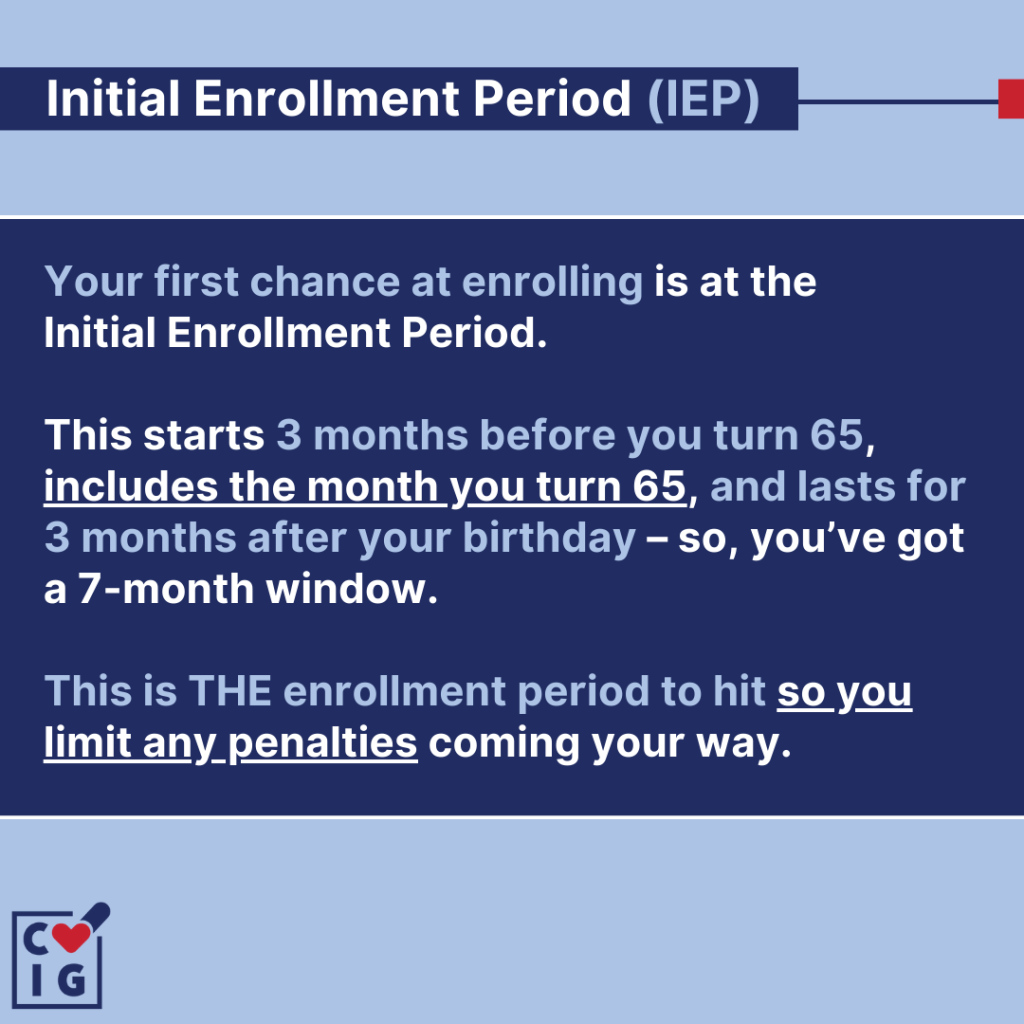
If you’re new to Medicare, you’ve likely heard about the Initial Enrollment Period (IEP), but you may not fully understand its significance.
The Initial Enrollment Period is your first opportunity to enroll in Medicare, and it’s crucial to navigate it correctly to avoid future penalties.
For those new to Medicare, the Initial Enrollment Period is a seven-month window that starts three months before the month you turn 65, includes the month you turn 65, and ends three months after the month you turn 65.
During this period, you can sign up for:
- Medicare Part A (Hospital Insurance)
- Medicare Part B (Medical Insurance)
- Medicare Part C (Medicare Advantage)
- Medicare Part D (Prescription Drug Plan)
Because missing the Initial Enrollment Period could result in higher premiums or delayed coverage for those new to Medicare, it’s important to mark the specific dates of your enrollment period on your calendar.
Alternatively, you can give us a call to schedule a time to discuss your plan options with our licensed agents, and we’ll reach back out during your IEP!
Please Note: Some individuals are automatically enrolled in Medicare Parts A and B. These include those already receiving Social Security benefits or those with certain qualifying conditions. However, automatic enrollment doesn’t cover Parts C and D, so you’ll need to enroll in these manually if you’re interested.
Annual Enrollment Period (AEP)
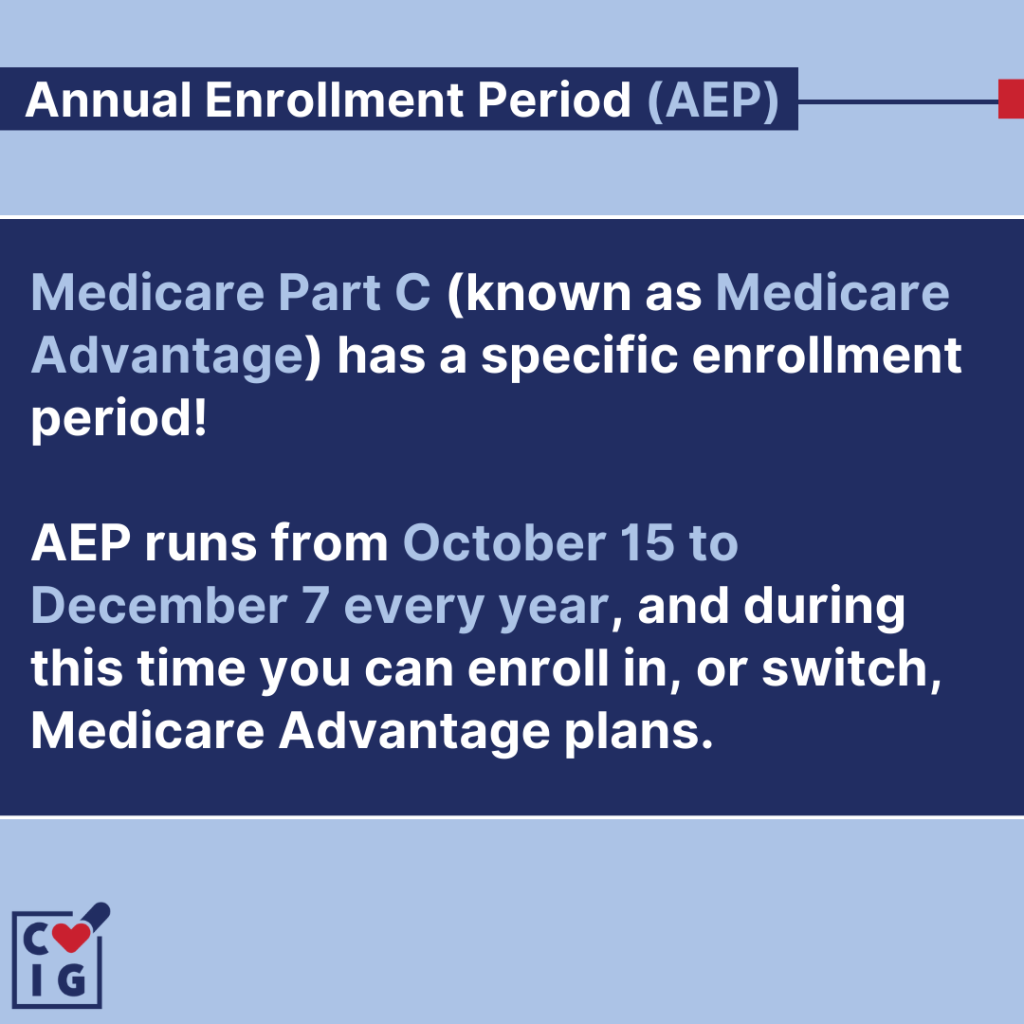
The Annual Enrollment Period (AEP) occurs from October 15 to December 7 each year and provides Medicare beneficiaries the opportunity to make changes to their coverage to better meet their evolving healthcare needs.
For example, beneficiaries can switch from Original Medicare to a Medicare Advantage plan or vice versa. This allows them to explore different options and select a plan that aligns with their preferences and requirements.
To make the most of the Annual Enrollment Period, it’s important to review your current healthcare needs and assess whether your existing plan still meets those needs. You should consider factors such as:
- Prescription drug coverage
- Doctor networks
- Out-of-pocket costs
Comparing available plans during this Medicare enrollment period with these factors in mind can help you identify options that provide more comprehensive coverage at an affordable price.
You can use resources like the Medicare Plan Finder tool to explore your options. Or, you can consult with a trusted advisor from CVIG. Our agents can provide guidance on available plans in your area.
Special Enrollment Period (SEP)
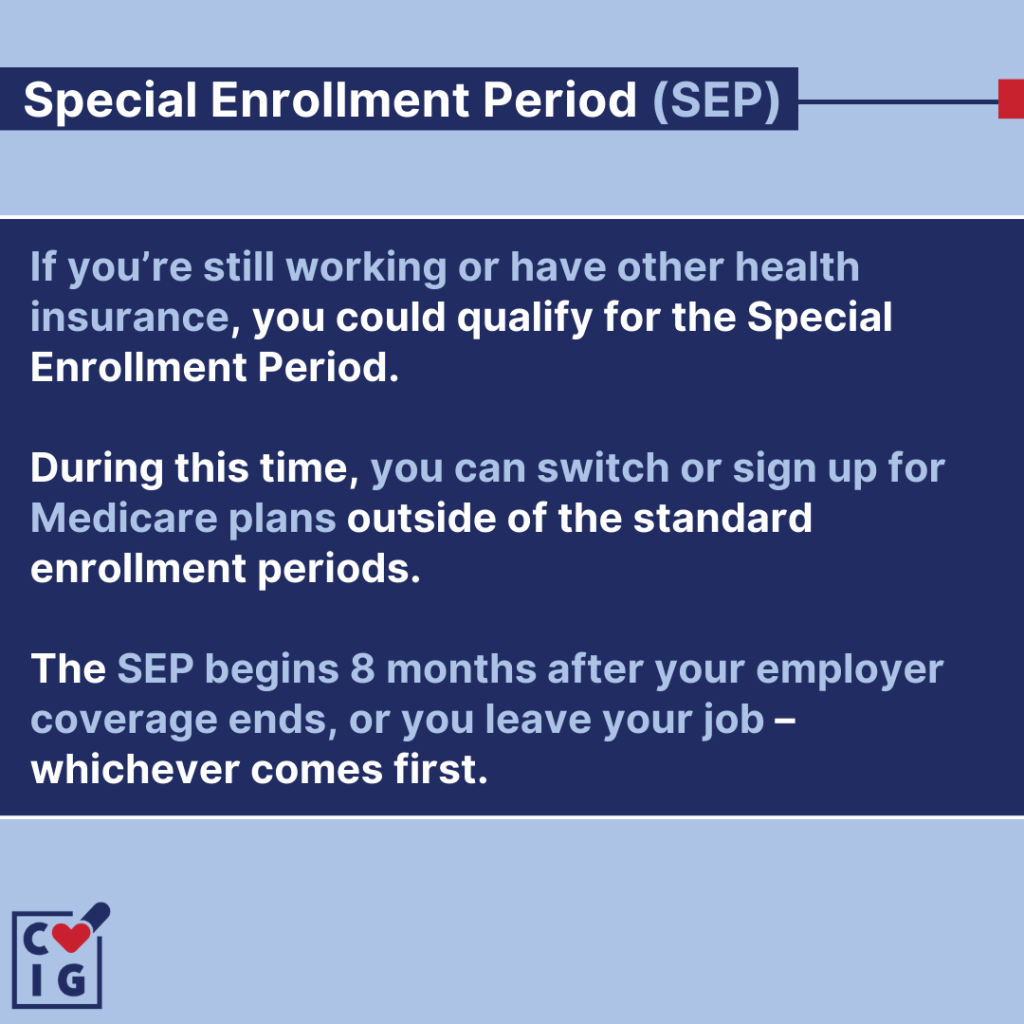
The Special Enrollment Period (SEP) allows eligible individuals to sign up for Medicare or make changes to their existing coverage when they experience qualifying life events.
Examples of qualifying events include:
- Retirement
- Loss of employer coverage
- Relocation
During the Special Enrollment Period, beneficiaries have the flexibility to select Medicare plans that align with their specific healthcare needs. This means they can choose plans that cover their preferred doctors, medications, and medical services.
Enrolling during this period ensures continuous coverage without penalties or gaps in healthcare.
General Enrollment Period (GEP)
What happens if you missed your Initial Enrollment Period and you don’t qualify for an SEP? There’s one more window, called the General Enrollment Period, or GEP. It runs from January 1 to March 31 each year. You can sign up for Part A and/or Part B during this time.
However, there are a couple of important catches. First, your coverage won’t begin until July 1st. Second, this is where those late enrollment penalties for Part B can come into play.
It’s always best to sign up when you’re first eligible to avoid these extra costs and coverage delays.
Tips for Staying on Top of Medicare Enrollment Deadlines
- Mark Your Calendar: Write down your key dates — Initial, Annual, and Special Enrollment Periods — to stay ahead of deadlines.
- Review Your Coverage Every Year: Even if you’re happy with your plan, it’s smart to review it every year. Health needs change, and so do Medicare plan details (such as premiums, drug formularies, and provider networks).
- Seek Help Early: It’s never too soon to start planning your Medicare strategy.
- Avoid Assumptions: Don’t assume your coverage will automatically renew the same way or that it still meets your needs — plans can change!
At Core Value Insurance Group, we make it easy to stay informed and prepared. We walk you through every step, from comparing plans to explaining premiums and benefits in plain, easy-to-understand terms, so you can meet all Medicare enrollment deadlines and requirements effectively.
Meet Your Medicare Enrollment Period Without the Stress
Understanding the rules and benefits of each Medicare enrollment period empowers individuals to make informed decisions about their healthcare coverage.
And the best part is that Medicare doesn’t have to be confusing when you have the right team by your side! Whether you’re approaching your 65th birthday or simply reviewing your current plan, Core Value Insurance Group is here to support you.
As a family-owned insurance agency, we pride ourselves on treating every client like part of our own family, which involves making the process of meeting Medicare enrollment deadlines stress-free. After all, your health and peace of mind come first.
Contact us today to speak with one of our friendly agents and make sure you’re enrolled in the right Medicare plan for your needs!